
2026-09-13 ·
Water Damage Restoration Timeline for Tarrytown Homes
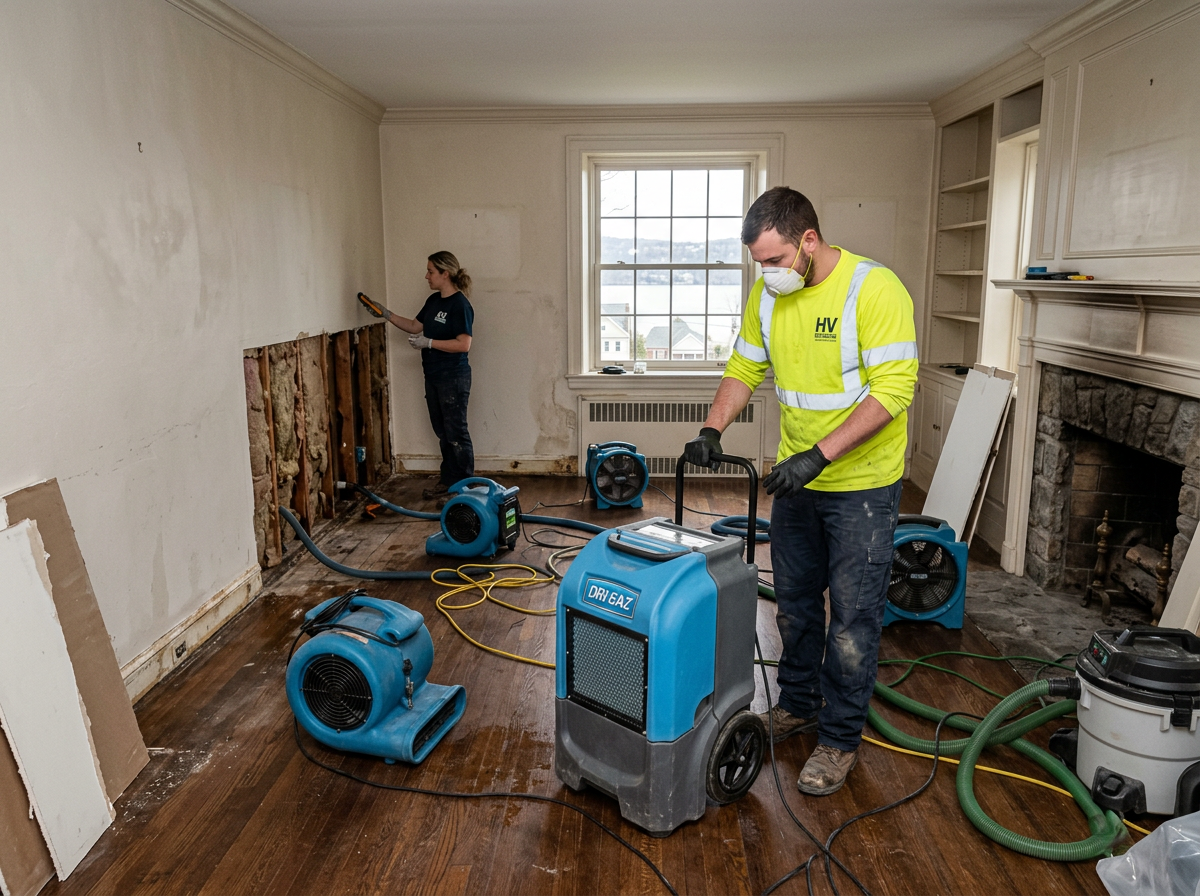
Water damage restoration in Tarrytown homes generally requires 3 to 7 days from initial extraction through final drying verification when crews use moisture meters to confirm safe levels. Local factors such as fieldstone foundations that weep during tidal surges or power loss during nor'easters can extend the process, while prompt Category 1 water removal keeps degradation from reaching Category 2 within the first 48 hours.
Initial Response and Extraction
Homeowners who call for help within the first few hours limit how far water travels into subfloors and wall cavities common in 19th-century Tarrytown river-slope houses. Crews begin with extraction using truck-mounted pumps followed by portable units to remove standing water before it migrates to adjacent rooms. During January and February, ice dams on older roofs or frozen pipes that burst after a thaw often create sudden interior flooding that requires immediate attention to prevent Category 1 water from turning into Category 2 within roughly 48 hours. Emergency water removal crews prioritize basements where sump pumps fail during extended power outages tied to coastal storms. Fieldstone foundations absorb moisture quickly, so technicians document moisture readings at multiple depths before moving equipment into place. This phase usually finishes inside the first 24 hours when access is straightforward.
Drying and Dehumidification Phase
Once bulk water is gone, the focus shifts to lowering moisture content in wood framing, plaster, and insulation over the next 2 to 5 days. Industrial air movers and dehumidifiers run continuously while technicians adjust placement based on daily meter readings rather than fixed schedules. In Tarrytown homes near the Hudson, humidity from tidal air can slow evaporation, so crews often run equipment longer in lower levels where fieldstone holds residual dampness. Target interior humidity stays between 40 and 50 percent while temperatures are maintained around 70 degrees to encourage moisture release without encouraging mold. Water damage restoration teams return each day to reposition fans and record progress, noting any hidden pockets behind cabinets or under stairs that older floor plans frequently hide. This stage ends only when moisture meters show levels consistent with unaffected materials throughout the affected zones.
Monitoring and Mold Prevention
Mold can begin growing on wet organic materials such as drywall paper or carpet backing within 24 to 48 hours, so crews inspect every 12 hours during the drying window. In homes with fieldstone foundations, moisture that travels upward through mortar joints creates hidden damp zones that require extra attention. Technicians check both visible surfaces and probe cavities with meters to catch early signs before spores spread. When conditions indicate elevated risk, such as after a nor'easter that leaves standing water for more than a day, additional containment barriers help isolate the work area. Mold remediation steps may become necessary if readings remain high beyond 72 hours, though most Tarrytown jobs stay on track when extraction starts quickly. Homeowners receive daily updates that include meter logs so they can see measurable progress rather than estimates.
Final Verification and Return to Normal
Restoration concludes when moisture meters confirm that all affected materials have returned to dry, stable readings across multiple locations. Crews then remove equipment and perform a final walkthrough with the homeowner to point out any areas that may need follow-up repairs, such as refinishing floors or replacing baseboards. In Tarrytown, where many homes sit on slopes that direct runoff toward foundations, technicians often note drainage improvements that can reduce future risk during heavy spring rains. The entire process stays grounded in actual site conditions rather than assumptions, with every step documented for insurance purposes. Readers can explore how local climate patterns influence these timelines in greater detail through related coverage of Hudson Valley weather effects.
For homes in nearby communities facing similar river and storm conditions, the same sequence applies with only minor adjustments for building age and lot grade.