
Nineteenth-century river-slope houses from Tarrytown north to Beacon sit on rubble and fieldstone foundations that were never meant to stay dry. When tidal surge or nor'easter rain pushes water against these walls, moisture travels through the stone and appears as weeping lines six to eight inches above the slab. Homeowners often notice the problem only after carpet feels spongy or a musty smell rises from the cellar. Once water sits longer than forty-eight hours it shifts from clean Category 1 to contaminated Category 2, requiring different containment and disposal steps.
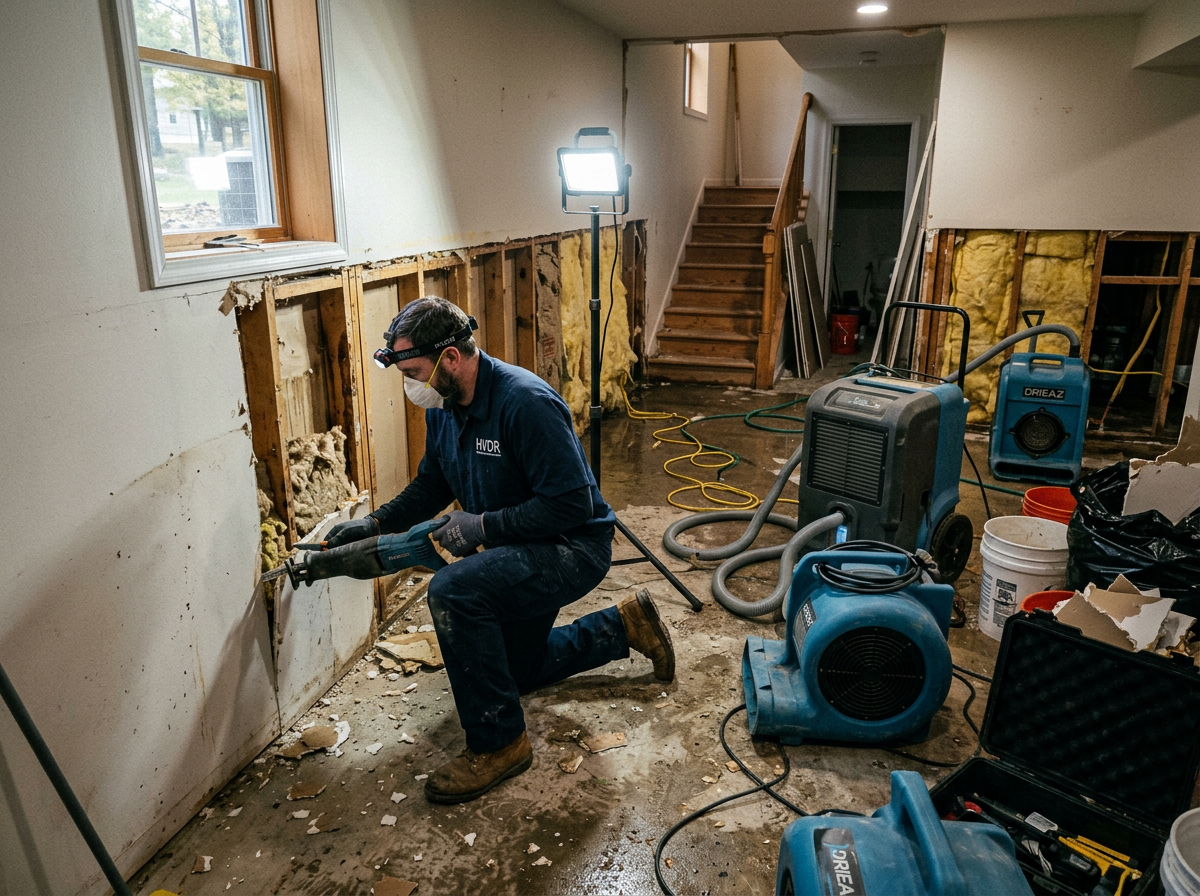
Technicians begin with extraction using truck-mounted pumps to pull standing water from finished basements before it wicks into oak joists or plaster lathe. Air movers are placed in overlapping patterns along the longest wall runs while commercial dehumidifiers are stacked in stairwells to create negative pressure that pulls moist air out of the stone. Carpet and padding are removed in strips so the concrete can be cleaned; any finished walls are opened at the base to expose the rubble behind them. Moisture meters are used daily on joists, subfloors and drywall to confirm readings have returned to ambient levels before cavities are closed.
Water Damage Restoration Near You — Choose Your City
Every city below has its own local Water Damage Restoration page with coverage details.
Westchester County
Rockland County
Westchester
Rockland
Dutchess
Dutchess County
Putnam
Orange
Putnam County
Sewage backups from overwhelmed municipal lines or failed septic tie-ins introduce Category 3 water that demands full personal protective equipment and separate disposal routes. In these cases extraction is followed by antimicrobial application on all porous surfaces that cannot be discarded. Even after drying is complete, hidden pockets of moisture can remain behind brick piers or under built-in cabinetry, so final verification includes pin readings at multiple depths and thermal imaging of the entire affected zone. Jobs fail when homeowners close walls before these readings are documented.
Technician insight
In Tarrytown, the thing that catches most people out with Water Damage Restoration is how fast clean pipe water turns Category 2 once it soaks into the rubble behind those old fieldstone walls during a January ice-dam event.
Tarrytown Nor'easter Basement Flood
A power outage during a nor'easter left a finished basement sump inactive and six inches of water covered the slab. Fieldstone walls were weeping and water had wicked into the base of drywall. Extraction was completed the same night, followed by targeted drying and daily meter checks. Once readings stabilized, walls were opened only where needed and the space was returned to use without mold growth.
Water Damage Restoration Services We Offer
✓Emergency Water Extraction
Rapid removal of standing water from basements and crawl spaces before it migrates into joists or behind fieldstone.
✓Structural Drying and Dehumidification
Strategic placement of air movers and dehumidifiers to pull moisture from rubble foundations and plaster walls.
✓Sewage and Category 3 Cleanup
Containment, extraction and disposal of contaminated water from municipal backups or flooded septic systems.
✓Moisture Mapping and Verification
Daily meter readings and thermal scans to confirm every cavity has returned to dry standard before walls are closed.
✓Carpet and Padding Removal
Cutting and disposal of saturated floor coverings so concrete slabs and subfloors can be fully dried.
✓Contents Pack-Out
Inventory, removal and off-site drying of furniture, documents and household goods that cannot stay in the wet structure.
How it works
- 1
Arrival and Safety Assessment
Technicians evaluate electrical hazards, identify water category and set up containment to protect unaffected rooms.
- 2
Extraction of Standing Water
Truck-mounted pumps and portable extractors remove bulk water from slabs, sumps and wall cavities.
- 3
Drying and Dehumidification
Air movers and dehumidifiers are positioned for maximum airflow across stone and wood; daily meter checks track progress.
- 4
Verification and Handover
Final moisture readings and thermal images confirm the structure is dry before any reconstruction begins.
Pricing
Scope is determined by water category, square footage affected, number of drying days required and whether sewage or finished basement contents are involved; call for an inspection-based quote.