
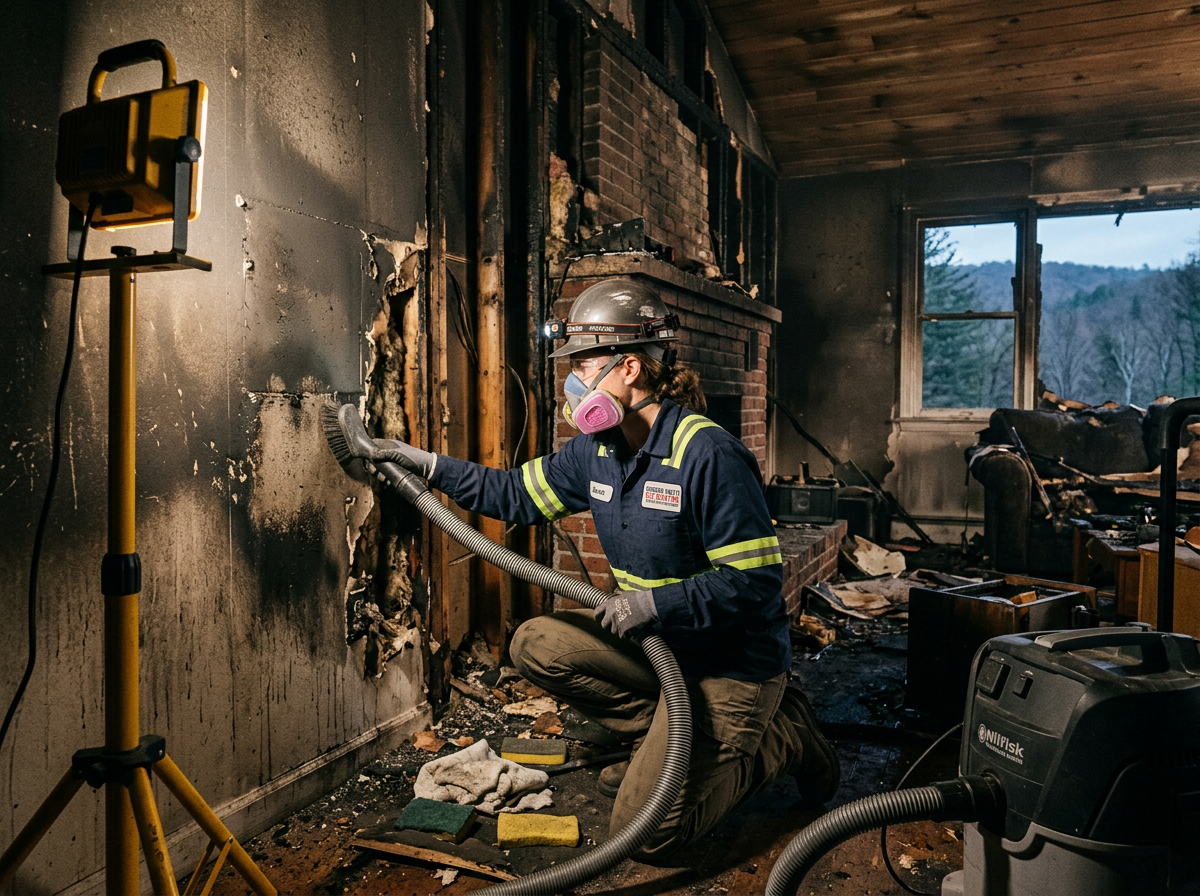
In Tarrytown and similar river villages, structure fires rarely stay dry. Firefighters must bring water, and that Category 1 water quickly mixes with soot to become Category 2 or 3 within hours, especially when it reaches fieldstone and rubble foundations that were never meant to stay dry. Smoke travels upward through balloon framing and along interior stone walls, leaving oily residues on lath and plaster that standard cleaning misses. Homeowners often discover hidden damage weeks later when winter ice dams form over compromised roof decks or when sump pumps fail during the next nor'easter and re-wet the already contaminated lower levels.
Restoration begins with identifying the soot type—dry, wet, or protein—because each requires different cleaning chemistry and cannot be treated the same. Suppression water must be extracted immediately from cellars and crawl spaces before it migrates into finished spaces above; once it reaches wooden joists or subfloors, drying windows shrink to roughly 48 hours before secondary mold growth begins. Thermal fogging reaches voids that air scrubbers cannot, yet it still leaves odour pockets in rubble foundations if the source moisture is not removed first. Jobs fail when crews close walls before moisture meters confirm every layer is dry or when contents are packed out without separating items that off-gas versus those that can be cleaned on site.
Fire Damage Restoration Near You — Choose Your City
Every city below has its own local Fire Damage Restoration page with coverage details.
Westchester County
Rockland County
Westchester
Rockland
Dutchess
Dutchess County
Putnam
Orange
Putnam County
Limits are real. Not every charred beam can be saved, and some smoke odour in 150-year-old plaster will remain noticeable after treatment because the material itself has absorbed the residue. We document what can and cannot be restored so owners can make informed decisions before work proceeds. Every project ends with meter readings and photo verification rather than assumptions about hidden cavities.
Technician insight
In Tarrytown the thing that catches most people out with Fire Damage Restoration is how quickly suppression water reaches the rubble foundations and turns a smoke job into a hidden water problem; once it sits under the floor, the January freeze-thaw cycle finishes the damage before anyone notices.
Tarrytown Kitchen Fire with Cellar Water
A kitchen fire in a 19th-century Tarrytown home sent smoke through balloon framing and forced firefighters to flood the first floor. Water migrated into the fieldstone cellar, mixing with soot. We extracted standing water, cleaned wet soot from plaster and joists, performed thermal fogging, and confirmed drying with meters before any finishes were replaced.
Fire Damage Restoration Services We Offer
✓Soot and Smoke Residue Cleaning
Removes dry, wet, and protein soot from plaster, wood, and masonry surfaces using chemistry matched to residue type.
✓Suppression Water Extraction
Extracts firefighter water from cellars and living spaces before it migrates into fieldstone foundations and framing.
✓Odour and Thermal Fogging
Neutralizes smoke odour in voids and porous materials that standard ventilation cannot reach.
✓Contents Restoration
Cleans, packs out, and stores salvageable household items while documenting what must be discarded.
✓Board-Up and Tarping
Secures openings and roofs to prevent weather intrusion and further water entry after the fire.
How it works
- 1
Safety and Initial Assessment
We evaluate structural stability, electrical hazards, and soot migration paths through the home's framing and foundations.
- 2
Containment and Water Removal
Negative air is established, then suppression water is extracted from basements and any affected living areas.
- 3
Cleaning and Odour Treatment
Soot is cleaned by type, followed by thermal fogging and air scrubbing to address remaining odour.
- 4
Verification and Drying Confirmation
Moisture meters and documentation confirm all layers are dry before walls are closed or contents returned.
Pricing
Scope depends on soot type, square footage affected, depth of suppression water into foundations, and whether contents require off-site cleaning. Call for an inspection-based quote.