
2026-09-13 ·
What to Expect from Water Damage Restoration After a Nor'easter
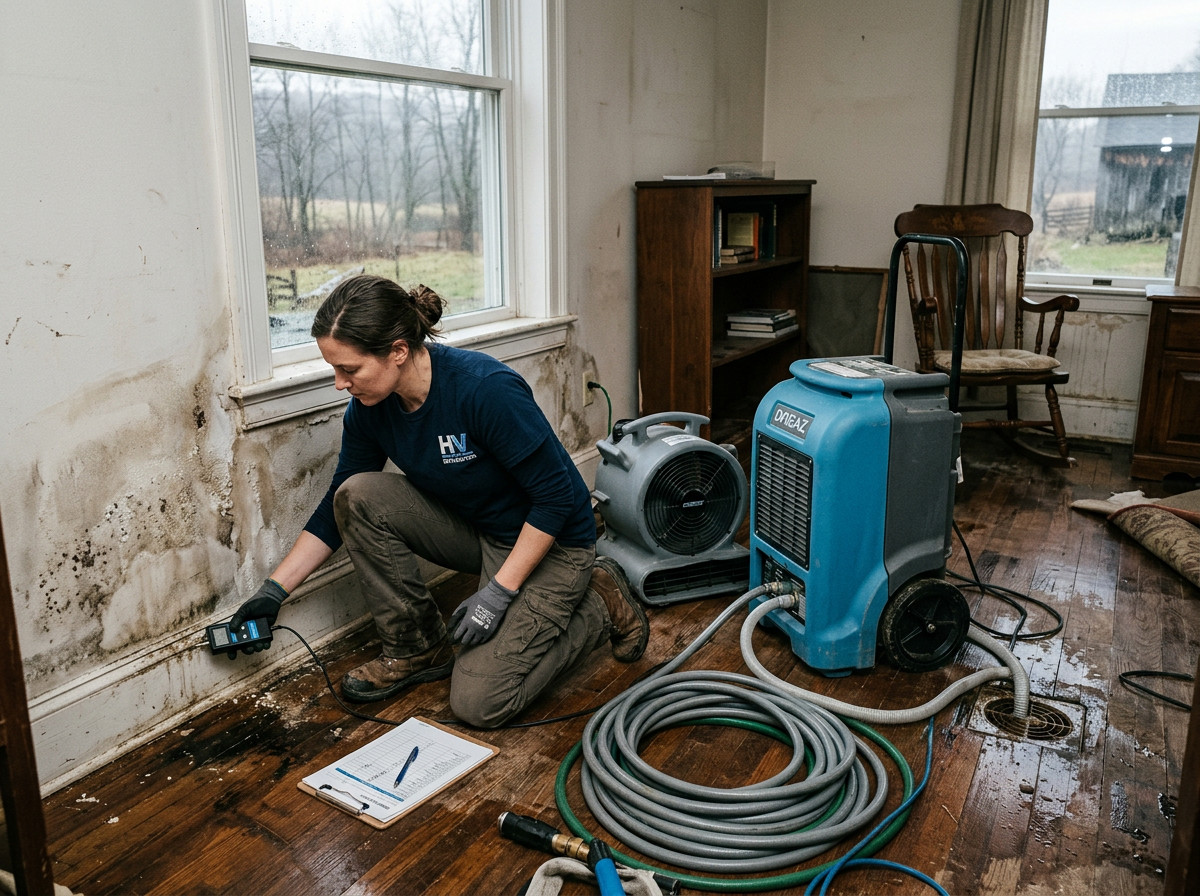
After a nor'easter, water damage restoration starts with emergency water removal within the first few hours of discovery, followed by drying that usually spans 3 to 5 days when crews use air movers and dehumidifiers while checking moisture levels with meters. Local homes near the tidal Hudson or on river slopes often see water enter through fieldstone foundations or from power outages that knock out sumps.
Initial Assessment and Extraction
Crews arrive to evaluate standing water from nor'easter surge or ice-dam melt and begin pumping it out right away. In Tarrytown and nearby river towns, basements with older foundations can collect water quickly once power fails during the storm. Extraction targets both visible pools and trapped moisture behind walls or under floors. Technicians document the affected areas and note any signs that water has reached electrical systems or insulation. This phase prevents further spread while the property remains safe to enter. Homeowners in areas like Dobbs Ferry or Irvington often see crews focus first on lower levels where gravity pulls water toward the foundation. Emergency water removal teams coordinate with property owners to prioritize high-risk zones such as finished basements.
Category Shifts and Time Sensitivity
Clean Category 1 water from rain or melt can degrade to Category 2 within about 48 hours once it picks up soil or debris from fieldstone walls. Hudson Valley properties built on slopes face this change faster because water travels through porous stone and mixes with organic material. Mold risk rises on wet wood or drywall between 24 and 48 hours, especially when indoor humidity stays high after a power outage. Restoration crews track these changes with moisture meters rather than relying on visual checks alone. Early extraction reduces the chance that water will require more extensive demolition later. Properties in Hastings-on-Hudson and Ardsley often need extra attention to hidden pockets along foundation joints where water lingers.
Drying and Verification Process
Once bulk water is gone, technicians set up drying equipment calibrated to local winter conditions, aiming for humidity targets below 50 percent while keeping temperatures steady. Moisture meters confirm that wall cavities, subfloors, and framing reach acceptable dryness levels before equipment is removed. In older 19th-century homes common along the Hudson, drying can extend beyond five days if fieldstone continues to release trapped moisture. Crews return daily to adjust placement of air movers and check readings. This measured approach avoids over-drying that could damage historic plaster or woodwork. Flooded basement cleanup crews in Tarrytown frequently combine this step with temporary power solutions when nor'easters leave neighborhoods without electricity for days.
Common Local Complications
Ice dams along roof edges and frozen pipes inside unheated walls add layers of damage that appear days after the storm passes. Fieldstone foundations in river-slope houses can weep water for weeks if drainage around the exterior is blocked by debris. Sump pump failures during outages allow groundwater to rise and stay in contact with organic materials longer than in newer construction. Restoration plans account for these realities by including follow-up visits to recheck readings after initial drying. Homeowners notice that attics and crawl spaces in towns like Sleepy Hollow or Croton-on-Hudson require separate attention because nor'easter winds drive water under eaves. Common causes of attic water damage during Hudson Valley storms outlines patterns seen repeatedly in the region.
Moving Forward After Drying
Once meters confirm dryness, the focus shifts to any needed repairs or material replacement while the structure is still accessible. Owners review their insurance policies directly with carriers to understand what depends on coverage details. Local teams based at 629 White Plains Rd, Tarrytown, NY 10591 remain available for questions about ongoing monitoring. Cost factors for water damage restoration in Tarrytown provides context on variables that affect project scope without quoting figures. This steady sequence helps properties return to normal use while addressing the specific conditions created by nor'easters in the Hudson Valley.