
2026-09-13 ·
The Role of Humidity Control in Post-Flood Drying
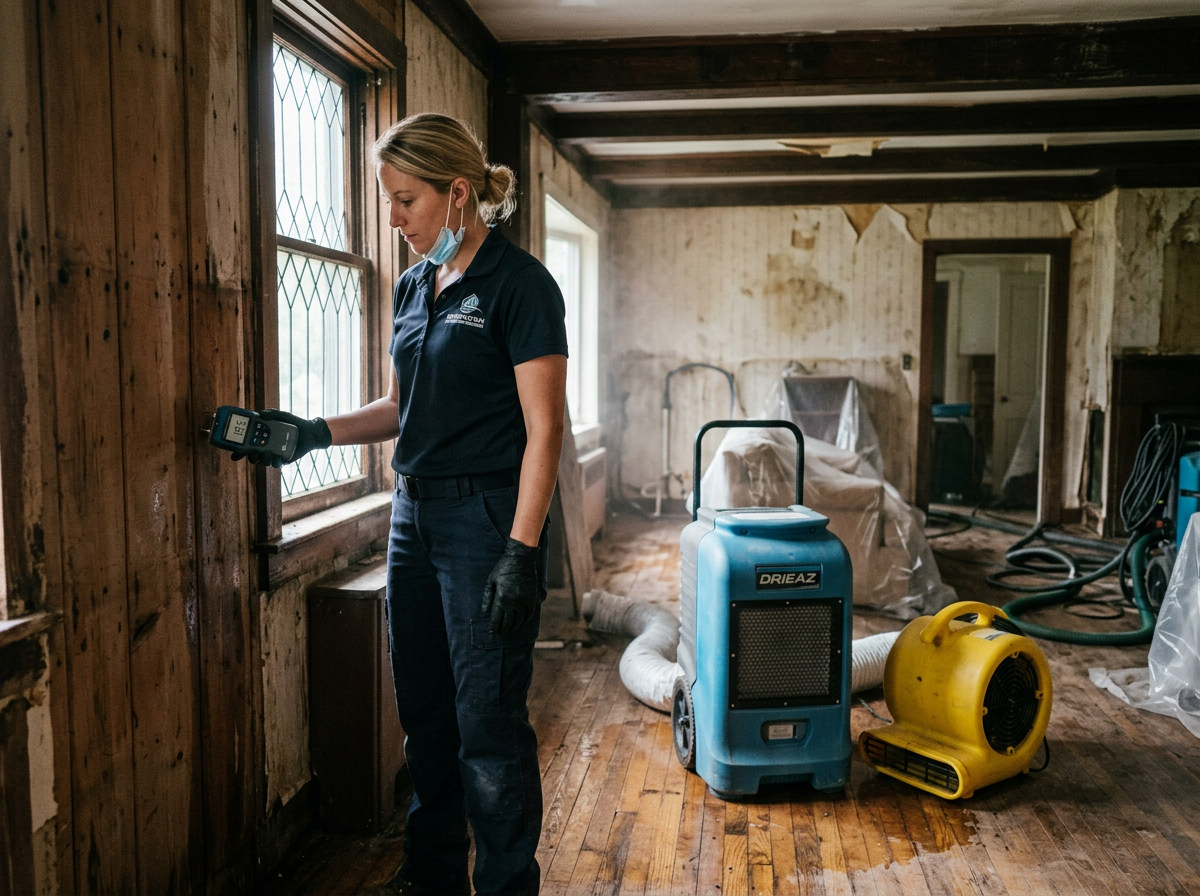
Maintaining indoor relative humidity below 50 percent during post-flood drying allows most structural materials in Hudson Valley homes to reach acceptable moisture levels within three to five days while limiting mold growth that starts on wet organic surfaces in 24 to 48 hours.
Why Humidity Levels Dictate Drying Speed
Relative humidity directly controls how quickly water evaporates from wood, drywall, insulation and fieldstone foundations common in 19th-century river-slope houses. When air holds more than 60 percent moisture, evaporation slows dramatically and trapped water stays in place long enough for Category 1 water to degrade into Category 2 within roughly 48 hours. In Tarrytown homes after tidal surges or nor'easter power outages, sump failures often leave basements saturated while outdoor humidity remains high. Lowering indoor humidity with dehumidifiers forces moisture out of hidden cavities before it migrates to adjacent rooms. Without this control, surface drying can appear complete while subfloor and wall cavities remain wet, creating hidden pockets that later feed mold colonies.
Equipment Choices That Maintain Target Humidity
Industrial dehumidifiers paired with air movers create the airflow and moisture removal needed to hold relative humidity between 40 and 50 percent across the affected zone. Technicians place sensors at multiple heights because humidity near ceilings often differs from levels at floor level in older homes with high ceilings. In winter, when ice dams and frozen pipes release water, supplemental heat may be added to raise air temperature without pushing humidity above the target range. Regular meter checks confirm that drywall and joists continue to release moisture at a steady rate. Homeowners can monitor progress with inexpensive hygrometers placed away from vents, but professional equipment adjusts output automatically as conditions change.
Hudson Valley Conditions That Complicate Humidity Control
Tidal influence up to Troy and frequent nor'easters create repeated wetting cycles that keep ambient humidity elevated for days after the rain stops. Fieldstone foundations in Tarrytown and nearby villages such as Irvington and Dobbs Ferry wick groundwater upward even after surface water is removed. Power cuts during storms disable existing dehumidification systems, allowing humidity to rebound quickly. In these situations, temporary generators and portable units become essential to maintain the 40-to-50-percent window. What to Expect from Water Damage Restoration After a Nor'easter outlines how these regional weather patterns extend drying times when humidity is not actively managed.
When Humidity Control Requires Professional Support
Persistent readings above 55 percent after 48 hours of drying indicate hidden moisture that standard household fans cannot address. At that point, water damage restoration teams bring larger equipment and moisture-mapping tools to locate water behind plaster or beneath hardwood. Properties in Hastings-on-Hudson and Ardsley that experience repeated basement flooding often need targeted extraction before dehumidification can begin. Flooded Basement Cleanup crews focus first on removing standing water so subsequent humidity control can work efficiently. If mold appears within the 24-to-48-hour window, mold remediation follows immediately to prevent spores from spreading through HVAC systems during the drying phase.
Verifying Complete Drying Before Rebuilding
Moisture meters inserted into wood and drywall confirm that equilibrium moisture content has returned to normal ranges, typically 10 to 12 percent for most interior lumber. Humidity is held at target levels for an additional 24 hours after meters read dry to ensure any remaining bound water has evaporated. Only then are affected areas cleared for repairs. This final verification step prevents callbacks when homeowners later notice musty odors or warped flooring that developed because humidity was allowed to rise too soon.