
2026-09-13 ·
Spring Thaw and Its Impact on Local Foundations
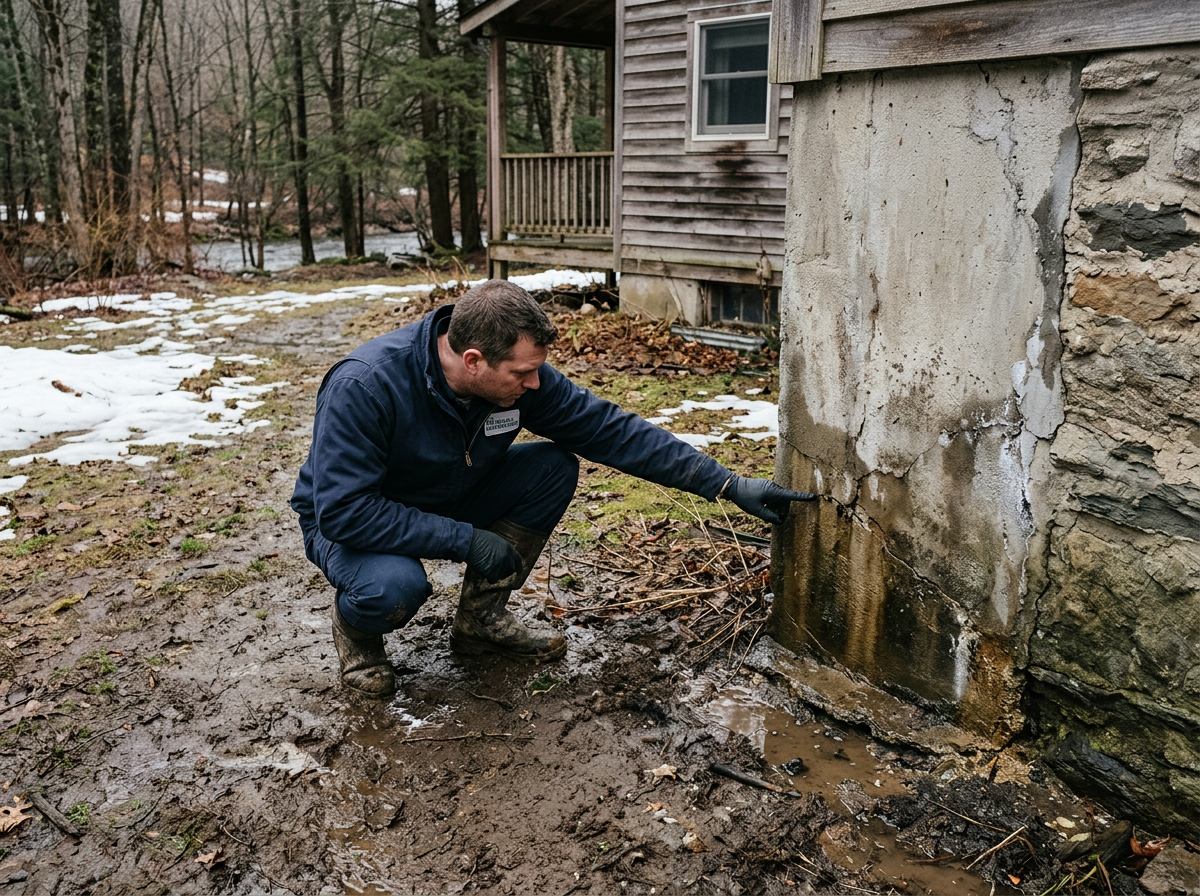
Spring thaw in the Hudson Valley typically drives extra moisture into older foundations within days of sustained above-freezing temperatures, as snowmelt and ice-dam runoff enter fieldstone walls that have already been stressed by winter freezes.
Winter Freeze Cycles and Foundation Stress
January and February freezes push water into cracks in 19th-century fieldstone foundations common along the Hudson River slopes from Tarrytown northward. Once temperatures drop below freezing, any trapped moisture expands and widens those joints. When thaw arrives, the same paths allow rapid water entry from melting snowpack. Homes built on river slopes face added pressure because gravity directs runoff straight toward the base. Sump pumps that ran during nor'easter outages can leave residual water that only surfaces after the ground thaws. Checking for new cracks or damp spots right after the first warm spell helps catch issues before they spread.
Snowmelt and Ice Dam Runoff Patterns
Melting snow from roofs and yards flows toward foundations faster than soil can absorb it once daytime highs reach the mid-40s. Ice dams that formed along eaves during cold snaps release sudden volumes of water that find their way down exterior walls and into basements. In tidal sections of the Hudson up to Troy, storm surge combined with thaw can raise local water tables for several days. Fieldstone that weeps during these events often shows dark staining at mortar lines within 48 hours. Homeowners in Tarrytown and nearby river towns report the heaviest flows during the first week of consistent thaw after a heavy snow winter.
Category Changes and Mold Timeline in Thaw Water
Water entering foundations during spring thaw usually starts as clean Category 1 but shifts to Category 2 within roughly 48 hours once it contacts soil and organic debris. Mold growth on wet wood, paper, or carpet backing can begin in 24-48 hours when indoor humidity stays above 60 percent. Moisture meters confirm drying progress only after readings drop below 15 percent on affected materials. Prompt removal of standing water and targeted drying limit how far the category degrades. Properties along the Hudson Valley often need extended drying because thick fieldstone holds moisture longer than modern poured walls.
Practical Steps After the Thaw Arrives
Walk the exterior and note any new puddles against the foundation or water stains on interior walls once daytime temperatures stay above freezing. Clear gutters and downspout extensions so meltwater moves at least six feet away from the house. Run dehumidifiers in damp basements while monitoring with a meter until readings stabilize. If water has already reached living spaces or hidden cavities, professional extraction prevents further category shift. Water damage restoration crews familiar with local fieldstone can verify drying with meters and address hidden pockets before mold sets in. Review your insurance policy details with your carrier to understand what may apply to thaw-related claims.
When to Seek Local Help
Persistent dampness after a week of drying or visible mold on baseboards calls for targeted assessment rather than repeated DIY attempts. Crews serving Tarrytown and surrounding towns know the specific challenges of river-slope homes and can focus drying on the areas most affected by thaw runoff. How to Prevent Mold After Basement Flooding in the Hudson Valley outlines additional steps that pair well with meter-verified drying. What to Expect from Water Damage Restoration After a Nor'easter covers similar seasonal patterns that overlap with spring conditions. Hudson Valley Flood Response operates from 629 White Plains Rd, Tarrytown, NY 10591 and responds to these foundation concerns across the region.