
2026-09-13 ·
Post-Storm Inspection Checklist for Hudson Valley Properties
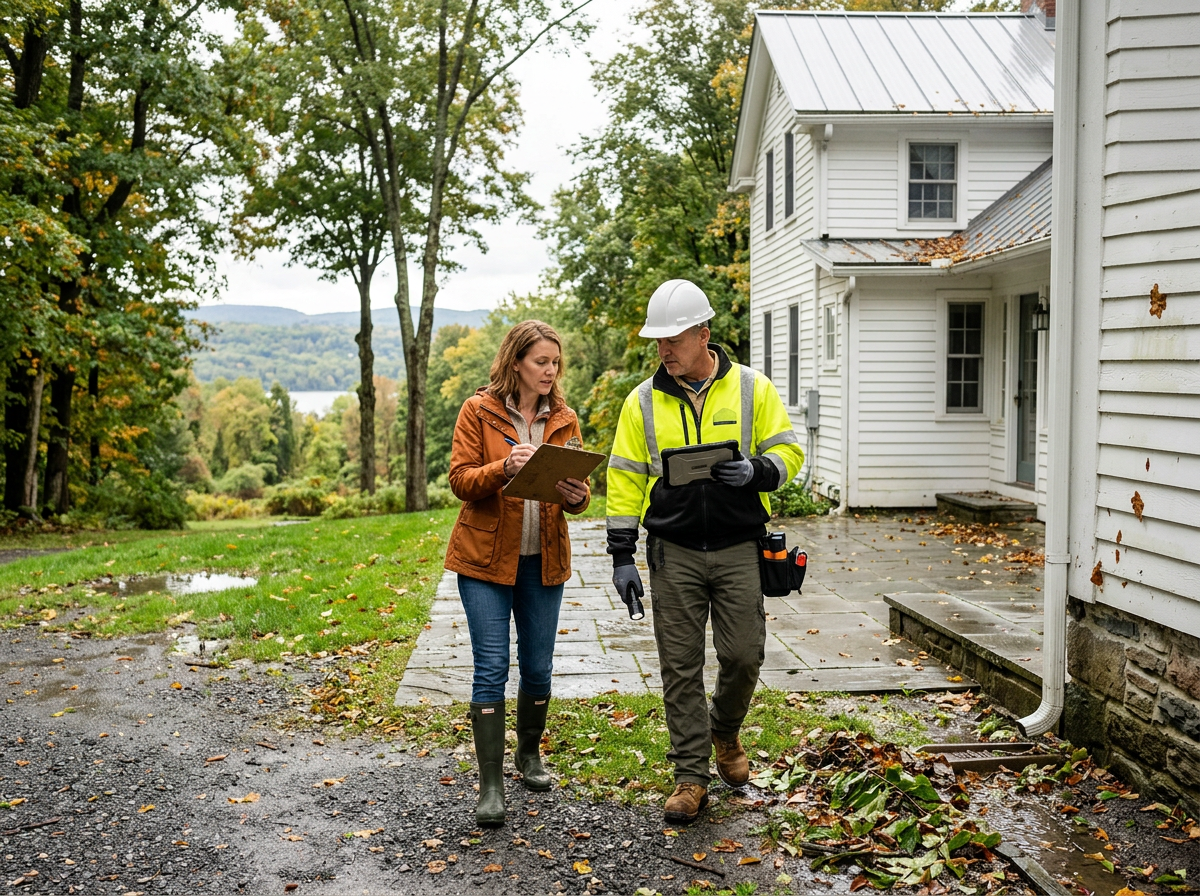
A post-storm inspection for Hudson Valley properties begins with checking fieldstone foundations and sump systems within 24 hours, then monitoring for moisture meter readings above 15 percent over the next 48 hours before water can degrade from Category 1 to Category 2.
Exterior Checks Around Fieldstone Foundations
Fieldstone foundations common in 19th-century river-slope homes from Tarrytown north to Beacon absorb tidal surge and nor'easter runoff quickly. Walk the perimeter after rainfall ends and look for new efflorescence or damp patches at grade level where mortar joints have opened. Note any standing water within 10 feet of the wall, especially near downspouts that may have clogged during high winds. In towns such as Irvington and Hastings-on-Hudson, properties built into slopes often channel water directly against the lower courses; mark these spots with tape so you can recheck them after dark when moisture is easier to see with a flashlight. If water has entered through weep holes or settled against the stone, schedule water damage restoration before the next freeze-thaw cycle expands the saturated material.
Attic and Roofline Inspection for Ice Dams
January and February storms frequently leave ice dams along eaves in Pleasantville, Chappaqua, and Armonk. Climb into the attic with a moisture meter and scan sheathing directly above exterior walls where warm air meets the cold roof plane. Readings above 20 percent indicate meltwater has already soaked insulation or reached the top plates. Check bathroom and kitchen vents that terminate in the attic for frost buildup that can back up under shingles during the next warm spell. Document any discolored drywall tape on ceilings below these areas so you can track whether the stain spreads after the next rain. Early detection here prevents the need for larger flooded basement cleanup once the ice melts and travels downward through interior walls.
Basement Sump and Power Failure Assessment
Nor'easters often cut power for 12 to 36 hours, allowing groundwater to rise past failed sumps in homes along the tidal Hudson. Open the sump pit cover and verify the float switch moves freely; test the backup battery unit if present by unplugging the primary pump. Feel the lower 18 inches of drywall or paneling for cool dampness that signals rising water. In Elmsford and Hawthorne, older homes with partial basements may have water entering through floor cracks that only appear after the storm passes. Record the highest water line with a pencil mark on the wall so you can measure any additional rise over the following 24 hours. Persistent moisture at this stage often requires emergency water removal before it reaches Category 2 conditions.
Tracking Moisture and Early Mold Indicators
Mold can begin on wet organic material within 24 to 48 hours when indoor humidity stays above 60 percent. Use a moisture meter on subflooring, baseboards, and any stored cardboard boxes in the lowest level. If readings remain elevated after 72 hours of ventilation, the water has likely moved into Category 2 and may need professional drying equipment. Compare your notes with the related guidance in What to Expect from Water Damage Restoration After a Nor'easter for typical drying timelines in the region. Homeowners in Dobbs Ferry and Sleepy Hollow often find hidden saturation behind kitchen cabinets or under laundry room flooring that only becomes obvious once the surface water has evaporated. Keep a daily log of meter readings until levels drop consistently below 12 percent.
When Professional Evaluation Is Warranted
If moisture persists beyond three days or you detect a musty odor near any foundation wall, contact Hudson Valley Flood Response at 629 White Plains Rd, Tarrytown, NY 10591 for an on-site assessment. Their technicians can map hidden moisture behind plaster and fieldstone that handheld meters may miss. Review your insurance policy language with your carrier before authorizing work, as coverage depends on the specific terms. Early, documented inspections help limit the scope of any required drying or material removal while conditions remain manageable.